

Zmajević Palace is a 17th-century landmark in the upper northwestern part of Perast, Montenegro. Its palace, church, octagonal bell tower and garden form a layered Baroque complex, making the site a compelling stop for understanding the town’s architectural history.
- Location: Upper northwestern Perast, on the Bay of Kotor.
- Historical name: Biskupija, or “Bishopric.”
- Getting there: Buses from Kotor take about 15 to 20 minutes to Perast.
- Access: Public opening hours and admission prices are not confirmed; check locally before visiting.
Where is Zmajević Palace in Perast?
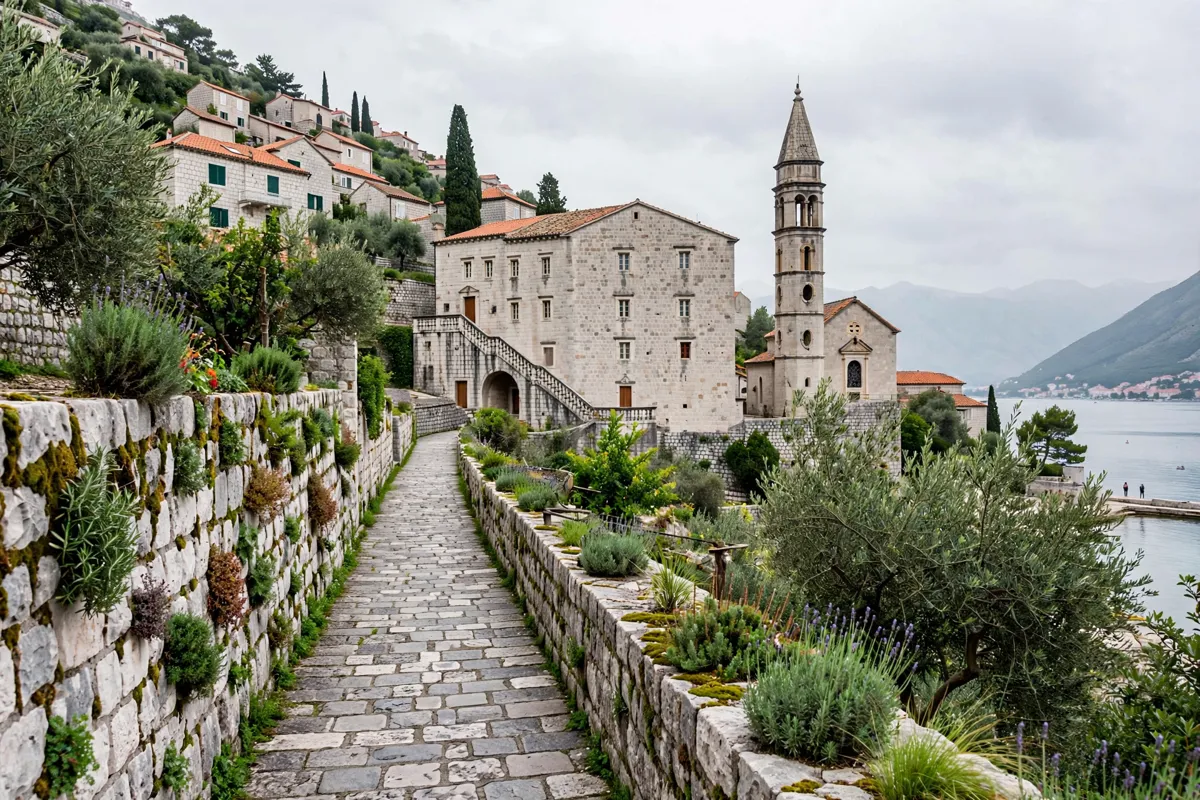
Zmajević Palace is in the upper part of Perast’s northwestern area, above the town’s coastal streets. The route from the coast climbs steep stairs, so expect an uphill approach as you make your way to the complex.
Perast is a Baroque town on the Bay of Kotor, with historic palaces including Zmajević, Bujović and Smekja. The palace is also known as Biskupija, meaning “Bishopric,” because bishops Andrija and Vicko Zmajević lived there. For a closer look at another landmark in town, Smekja Palace’s location and visiting tips offer a useful point of comparison.
What makes the palace and its setting distinctive?
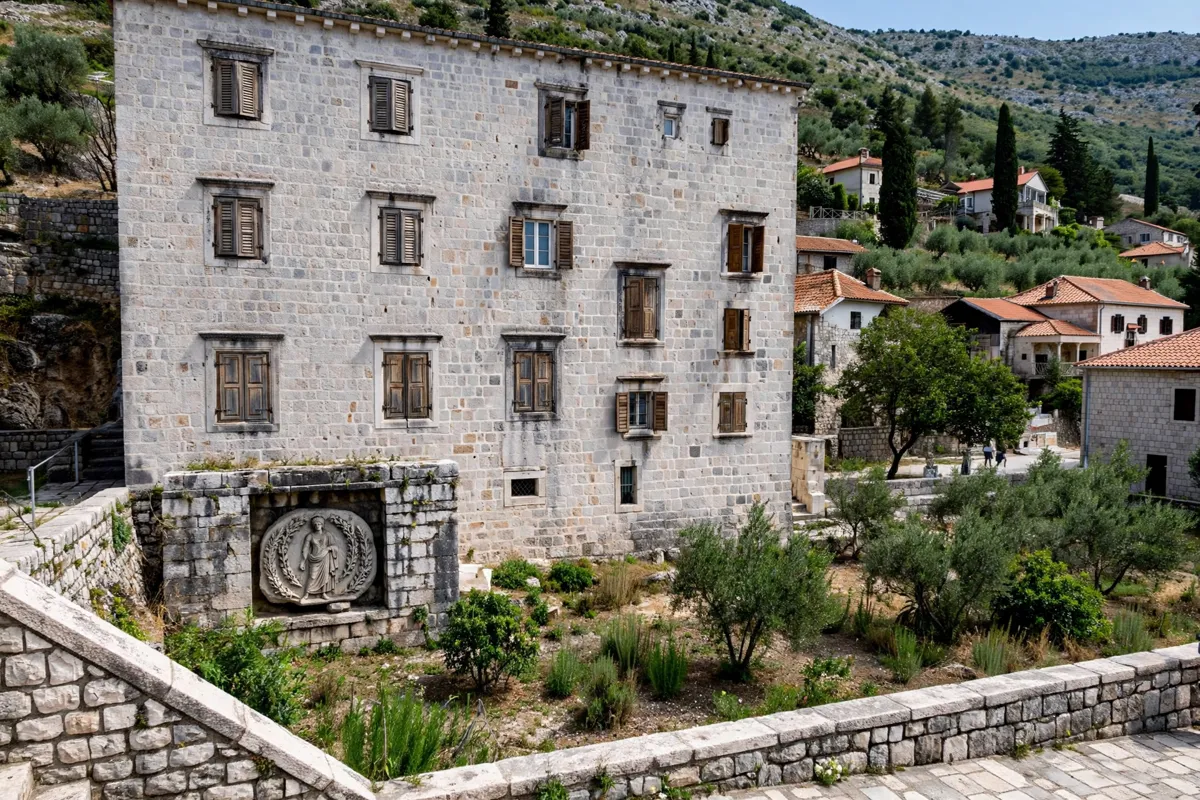
Zmajević Palace is a 17th-century complex whose final form took shape in the second half of that century. Its Baroque ensemble includes the palace, the Rosary church, an octagonal bell tower and a garden, arranged on a terraced, sloping site.
The Montenegrin Academy of Sciences and Arts’ lexicon describes the complex as one of Perast’s most significant and layered monument ensembles. Andrija Zmajević, one of the bishops associated with the palace, was appointed Archbishop of Bar and Primate of Serbia by Pope Clement X in 1671.
Architectural details connect the building to earlier periods and its former occupants. A Roman funerary monument, or cippus, is built into the façade, while Latin inscriptions appear on window frames on the first and second floors. An older chapel space has a trapezoidal ground plan; from the courtyard, access led to a bishop’s throne carved into the rock.
The palace once held the Zmajević family library, described as possibly the largest in Dalmatia. It was transferred to Burović Palace in Herceg Novi and burned in 1806. The palace had been abandoned as early as 1761; its roof was removed in 1876, accelerating its deterioration. Comprehensive restoration work began in 2005.
What else can you see around Perast’s historic centre?
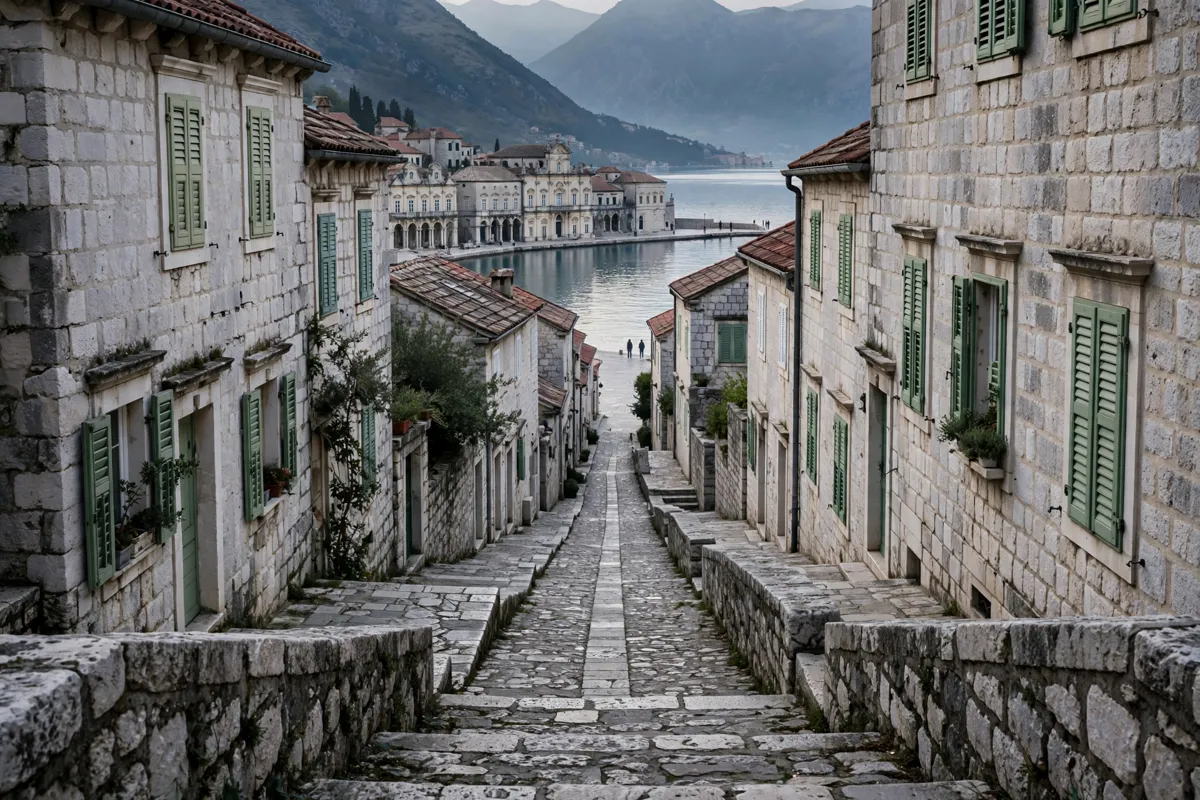
The palace belongs to a wider group of historic buildings that gives Perast its Baroque character. Bujović Palace is another of the town’s notable palaces; its location and visitor context are covered in this guide to Bujović Palace in Perast.
To put the palace in context, plan time to walk through Perast’s historic streets and look at how its buildings sit along the bay and climb the slope. The palace complex itself includes the church and bell tower, but the public access arrangements for those spaces should be confirmed locally.
How do you get from Kotor to Perast?
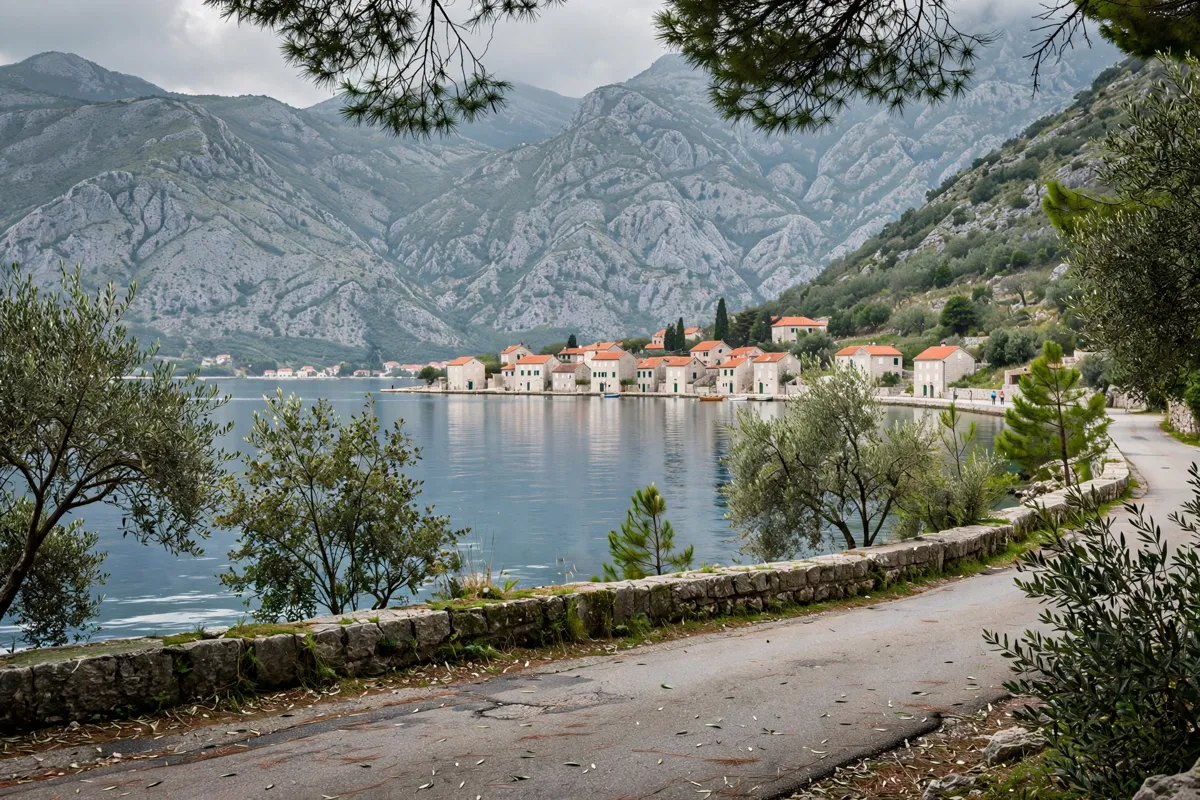
Perast is about 12 km from Kotor Old Town, and buses from Kotor take about 15 to 20 minutes. The fare is approximately €1. Once in Perast, the palace route climbs uphill from the coast, so allow for steep stairs on the way to the site.
Vehicle access into the village centre is restricted by parking barriers. Paid parking is available at the eastern and western entrances; taking a bus from Kotor is an alternative to driving and parking. If you’re planning a wider outing, this Perast day-trip guide covers the town as a broader visit.
What should you confirm before visiting?
Zmajević Palace is not documented as a regular public interior attraction. Visitor accounts differ on whether the church and courtyard can be entered, so confirm access to those areas locally rather than assuming the interior is open. Public opening days, hours, admission prices and a recommended visit duration are not confirmed.
Access arrangements and visiting details can change, so check the official site before you go. If no current details are available, ask locally about entry to the church and courtyard before making the uphill climb.
From Hotel Kamelija, Zmajević Palace is about a 32-minute drive.
FAQs
Why is Zmajević Palace also called Biskupija?
Biskupija means “Bishopric.” The name refers to bishops Andrija and Vicko Zmajević, who lived in the palace.
Can you visit the interior of Zmajević Palace?
Regular public access to the interior is not confirmed, and accounts differ on entry to the church and courtyard. Confirm access locally before your visit.
How old is Zmajević Palace?
It is a 17th-century building. One local tourism account dates its construction to 1664.
Is Zmajević Palace in Perast’s historic centre?
It is in the upper northwestern part of Perast, within the town’s historic setting. Reaching it from the coast involves steep uphill stairs.